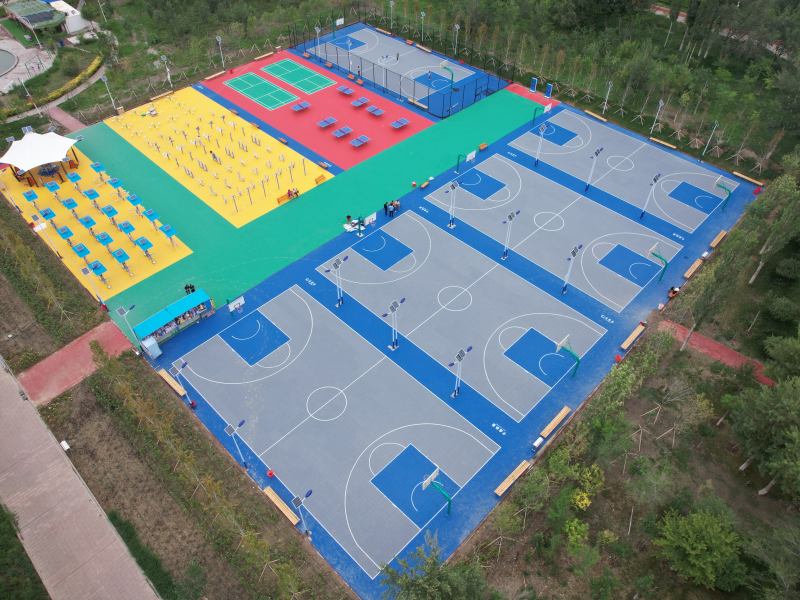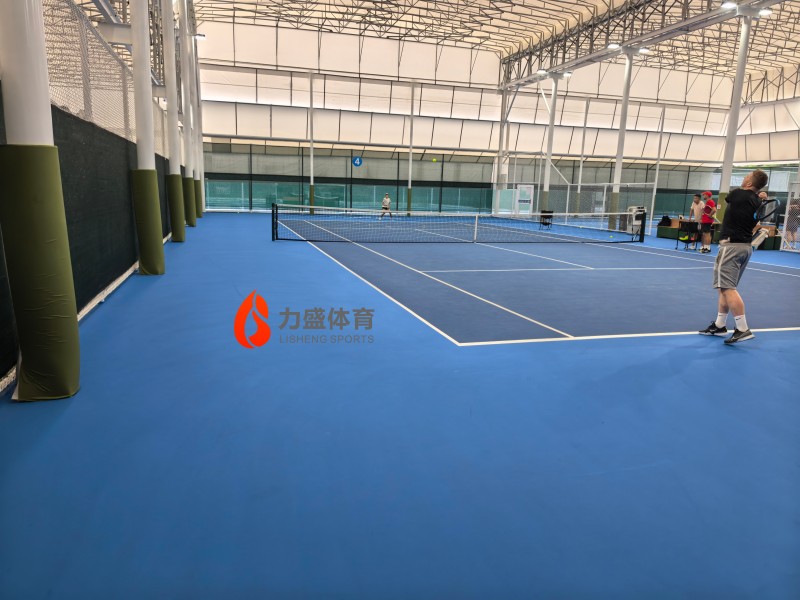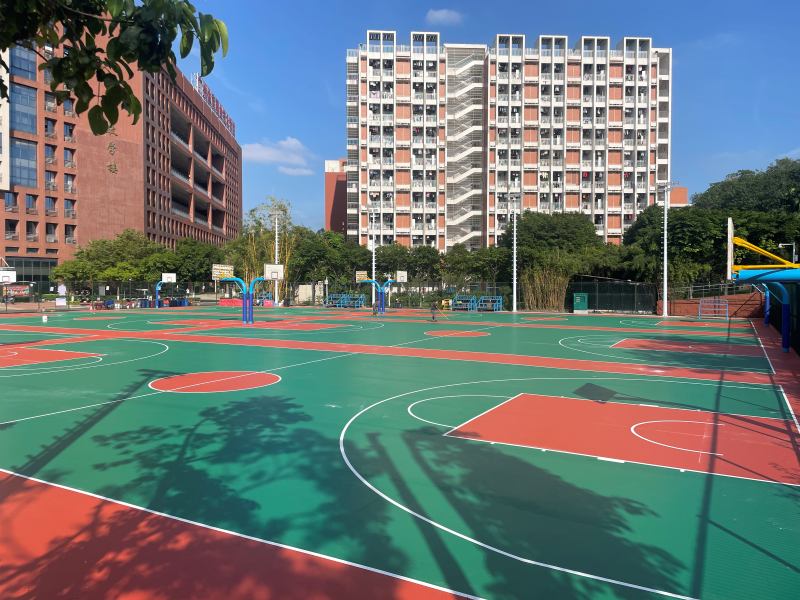
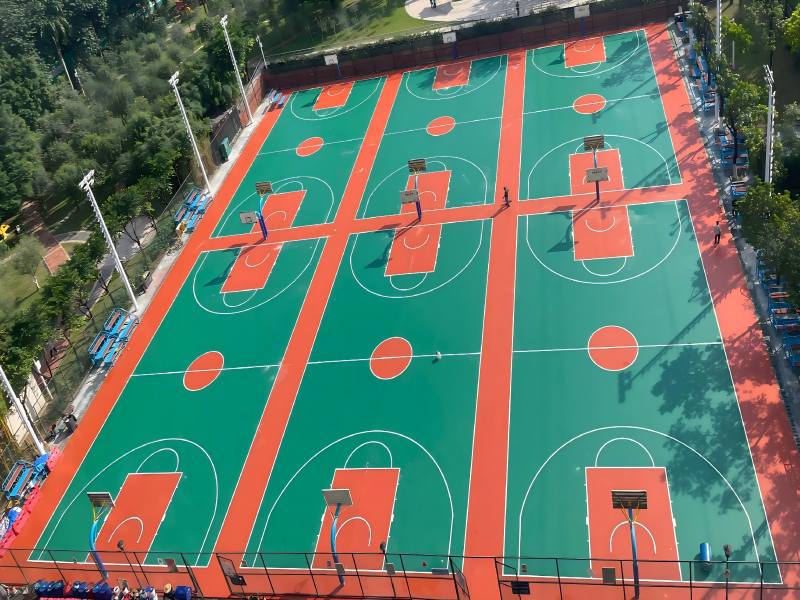
If you’ve researched modern basketball, volleyball, or multi-purpose court construction lately, you’ve probably heard Silicon PU (SPU) called the new “Gold Standard” for outdoor surfaces worldwide.
Why the hype? In 2025-2026, global sports flooring demand is booming (market growing at 3-5.5% CAGR), driven by more outdoor venues in emerging markets like Southeast Asia, Africa, and the Middle East. SPU is gaining traction fast because it delivers better athlete safety, extreme weather durability, and longer ROI compared to traditional acrylic — especially in hot, humid, or high-UV climates.
As a professional manufacturer at Lisheng Sports (Guangzhou, China), we produce both systems. Here’s a clear, honest breakdown of the structural differences, real-world performance, and which one fits your 2026 project best.
🔍 Core Difference: Structure Drives Performance
The biggest gap between Silicon PU and Acrylic is elasticity and layer functionality.
Silicon PU (SPU) – “Hard Top, Soft Bottom” Design SPU is a poured-in-place polyurethane system modified with silicone for superior bonding and weather resistance. Key layers:
- 3–8mm Elastic Cushion Layer (the heart): Absorbs up to 60-65% of impact energy, providing excellent shock absorption and joint protection during jumps, pivots, and falls.
- Professional Topcoat System (3+ layers): Includes bonding primer, wear-resistant middle coat, and UV-stable water-based finish coat. This creates a seamless, matte surface that’s highly durable and eco-friendly (low VOC).
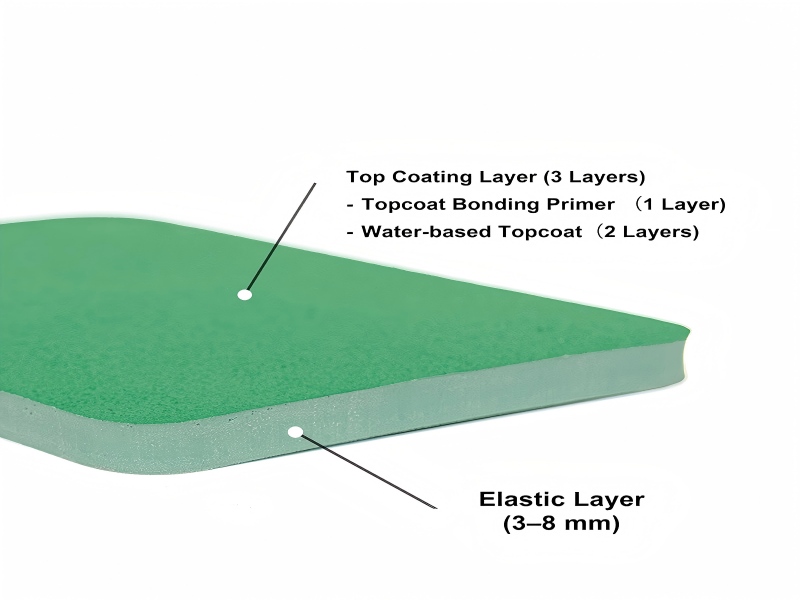
Result: A flexible yet firm playing surface that feels responsive and safe.
Acrylic Systems – Precision-Focused Coating Acrylic is a water-based, multi-layer paint-like coating applied over concrete/asphalt.
- Hard Acrylic: Leveling layers + texture layers for flatness and consistent ball bounce/speed. Zero built-in cushioning.
- Cushioned Acrylic: Adds rubber granule layers (fine/coarse) for moderate shock absorption — better than hard, but still thinner and less elastic than SPU’s poured cushion.
Result: Excellent for speed/precision sports, but less forgiving on joints and more prone to issues if the base isn’t perfect.
🏆 Why Silicon PU Often Wins: 5 Key Advantages (Backed by Real Use)
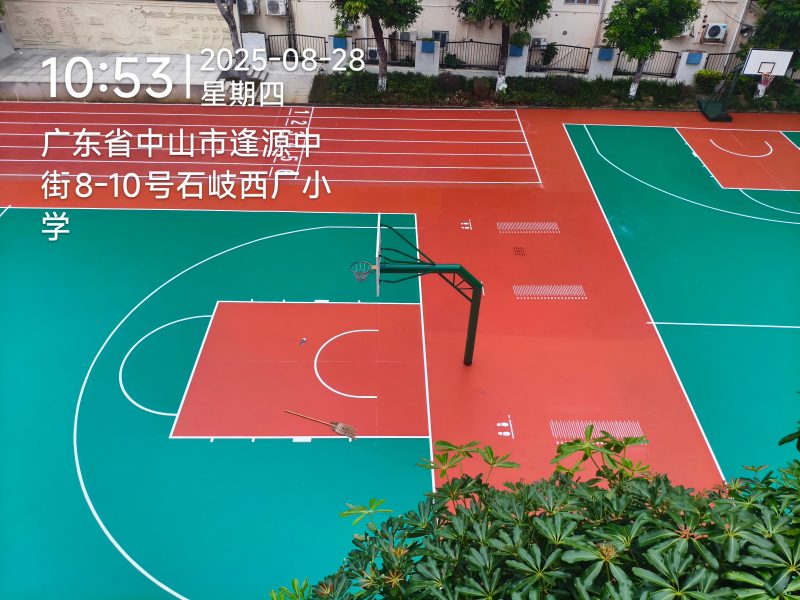
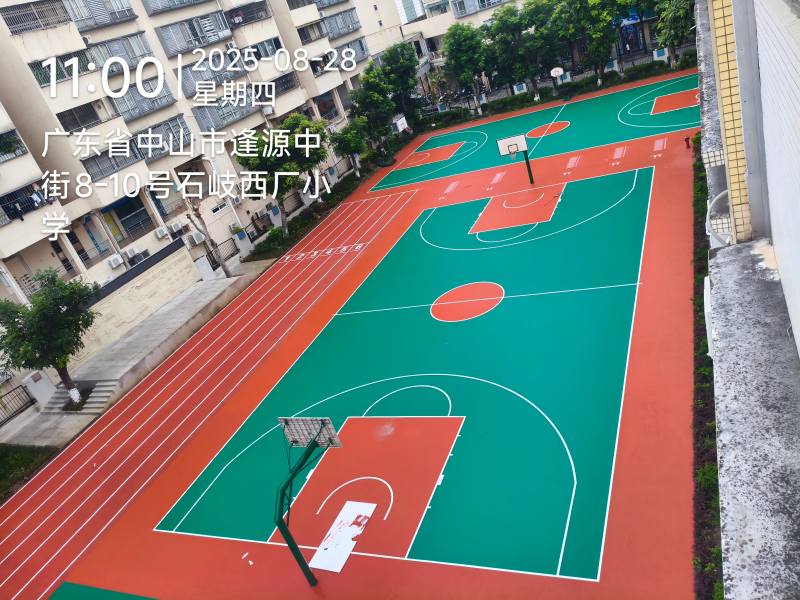
- Superior Joint Protection & Safety SPU’s thick elastic layer reduces impact stress by 30-40%+ compared to rigid acrylic, lowering knee/ankle strain — crucial for schools, youth leagues, and high-jump sports like basketball/volleyball.
- Extreme Weather & UV Resistance Silicone modification enhances deep bonding and flexibility. No bubbling, peeling, or quick fading even after years of intense sun, rain, or humidity (common acrylic failures in tropical climates). Many replacements of old acrylic courts with SPU report no wear marks or color loss.
- Longer Service Life & Lower Long-Term Costs SPU typically lasts 8-12+ years with minimal maintenance (seamless waterproof barrier prevents water seepage into base → fewer cracks). Acrylic often needs resurfacing every 3-5 years.
- Consistent Professional Performance Excellent rebound (≥90%), anti-slip grip (wet/dry), and matte finish that looks premium under lights — stays vibrant longer.
- Versatility for Multi-Purpose & High-Traffic Venues Ideal for schools, community centers, or pro training where safety + durability matter more than ultra-fast ball speed.
📊 Head-to-Head Comparison Table: SPU vs. Acrylic
| Feature | Silicon PU (SPU) | Cushioned Acrylic | Hard Acrylic |
|---|---|---|---|
| Shock Absorption | ⭐⭐⭐⭐⭐ (Excellent – 60%+ impact reduction) | ⭐⭐⭐ (Moderate – rubber granules) | ⭐ (None – rigid) |
| Service Life | 8–12+ years | 5–8 years | 3–6 years |
| UV & Weather Resistance | Superior (no fading/peeling in hot/humid) | Good (but prone to issues if base poor) | Moderate (fading/cracking risk) |
| Ball Bounce / Speed | Consistent & responsive | Medium-Fast | Fast & precise |
| Joint Protection | High (thick elastic layer) | Moderate | Low |
| Maintenance | Low (seamless, waterproof) | Moderate (resurface periodic) | Higher (frequent recoating) |
| Cost (Initial) | Higher (premium system) | Medium | Lower (budget-friendly) |
| Best For | Basketball, volleyball, schools, high-use outdoor | Tennis/pickleball clubs, comfort-focused | Pro tennis, speed courts, tight budgets |
| Lisheng Advantage | Optimized silicone formula for humid climates | Vibrant colors, quick install | Cost-effective precision |
🤝 Which One Fits Your 2026 Project?
- Choose Silicon PU (SPU) if: Safety and longevity are top priorities — e.g., school playgrounds, community basketball/volleyball courts, multi-sport venues in hot/humid areas, or projects where joint health matters (youth, seniors, frequent play). Worth the extra upfront cost for 40-60% lower long-term expenses.
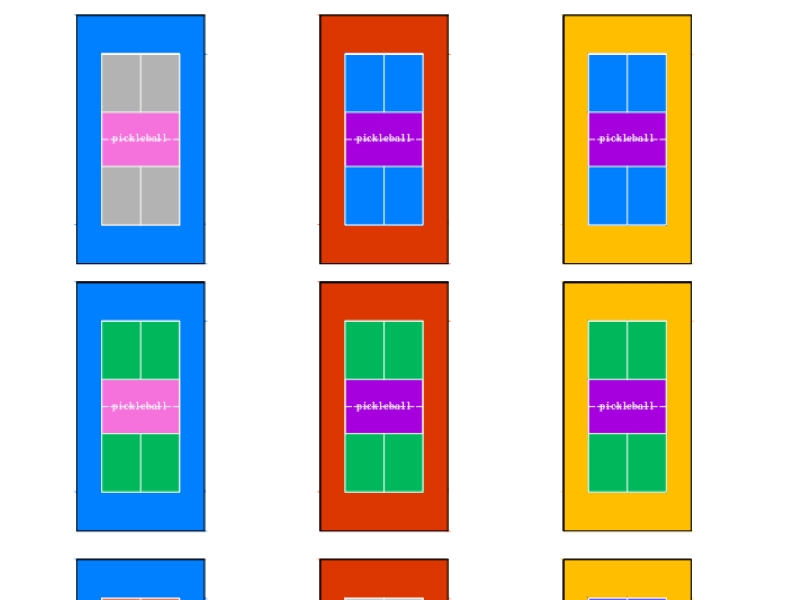
- Choose Acrylic if: You need fast ball speed/precision (tennis, pickleball), tight budgets, quick installation, or a venue with moderate use and a solid base. Hard for pure speed; cushioned for added comfort.
Both are excellent — it depends on your climate, usage, budget, and base condition. For hot/rainy exports, SPU often edges out due to better resilience.
Ready to Build a Court That Lasts? Contact Lisheng Sports
At Lisheng Sports, we manufacture high-quality Silicon PU, Cushioned Acrylic, and Hard Acrylic systems — with full technical support (TDS, MSDS, installation guides).
Want free samples, structural diagrams, or a climate/budget-specific quote? Share your project details (venue type, location, usage) — we reply within 24 hours.
Let’s create a durable, professional sports surface for 2026 and beyond!